Dave Battle. A chaotic world where a bunch of people named Dave have super powers. They train at Dave Academy, and every year fight for eternal glory in Dave Battle.
Project Breakdown
Project Origin
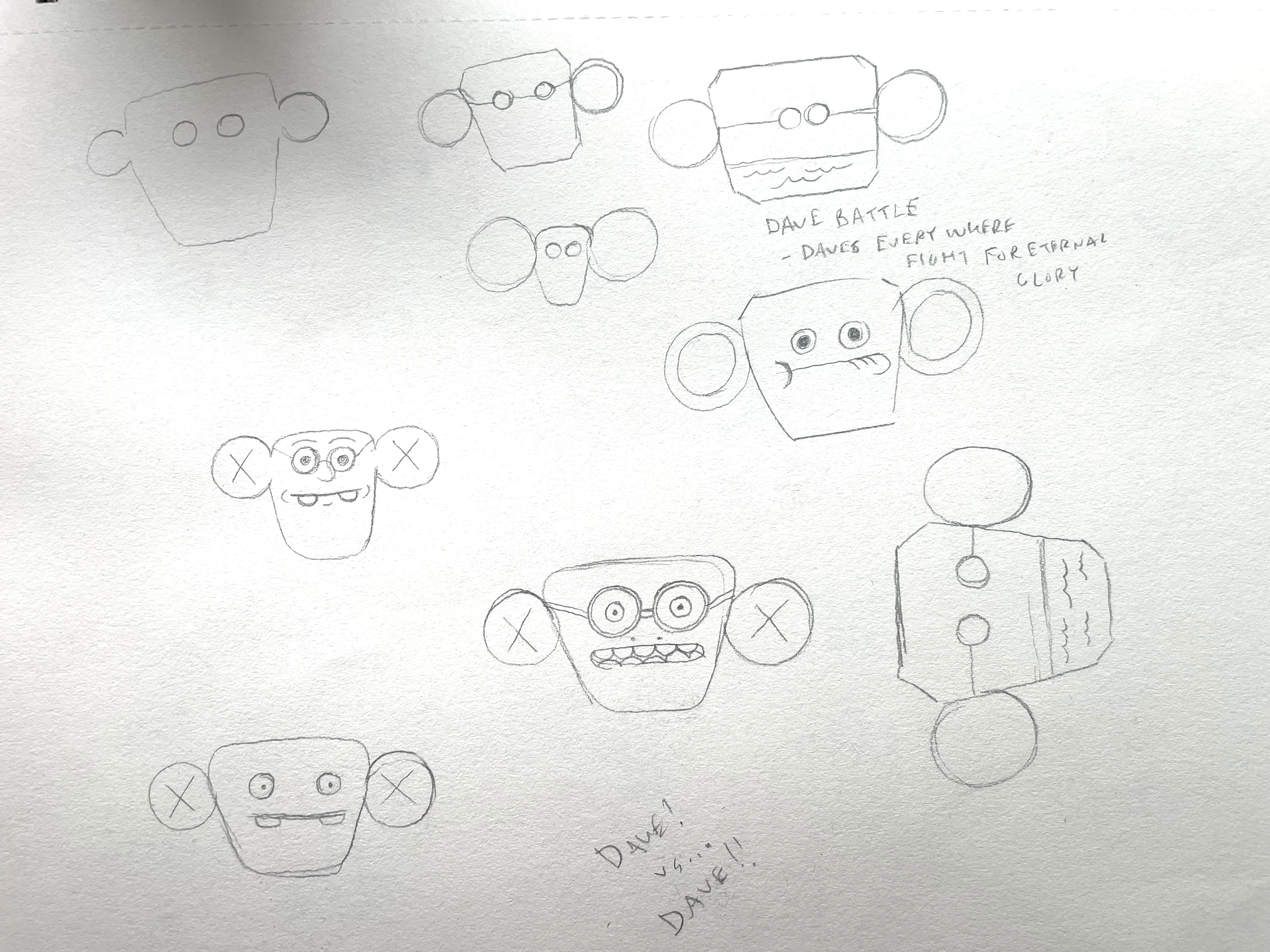
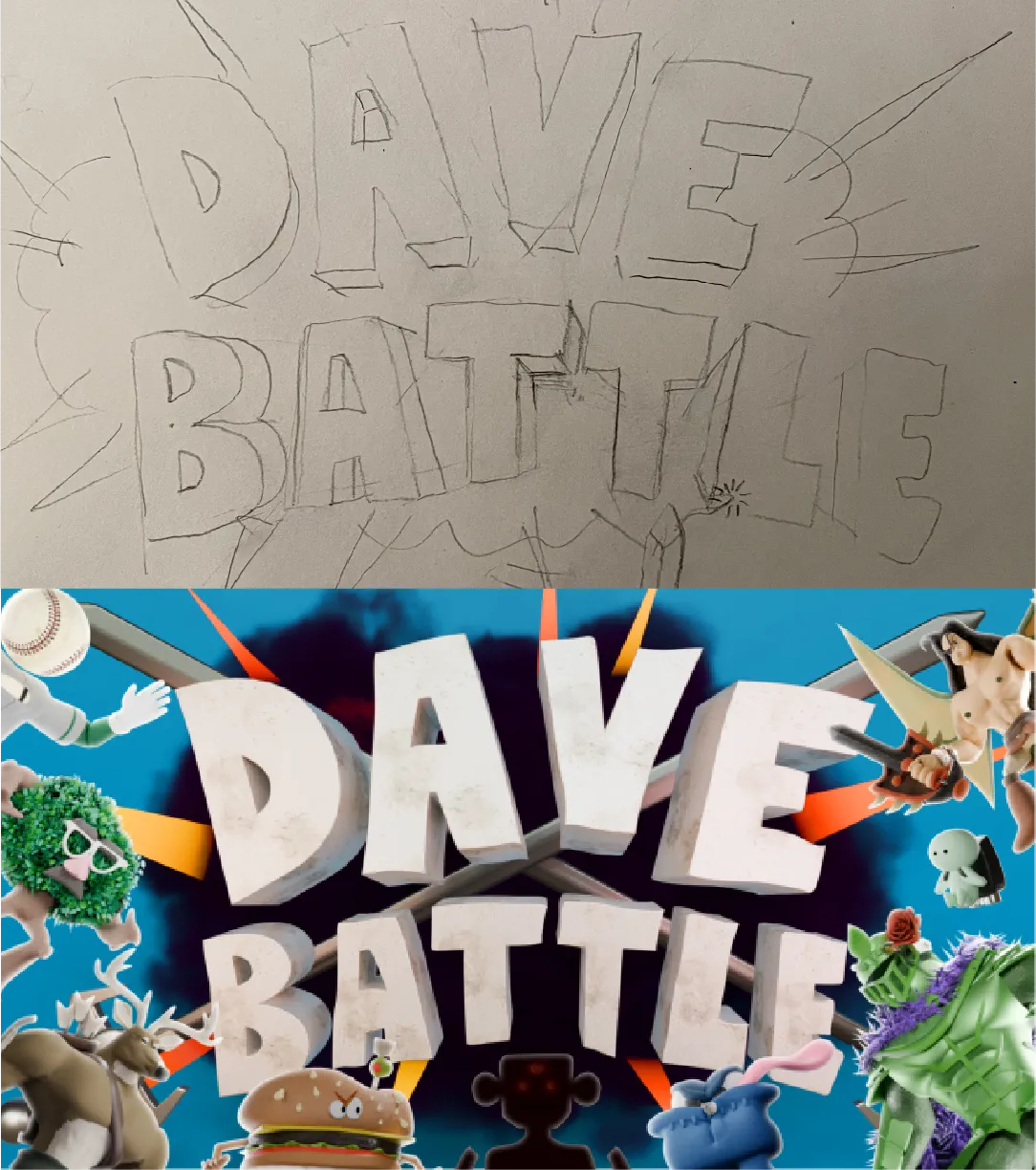
The idea for Dave Battle came about while sketching a character I had floating around my head. When I turned his head sideways, it reminded me of a battlefield in a Pokemon game. After drawing a couple battlefields, I heard the phrase, "Dave Battle" in my head. I instantly knew this was an idea I wanted to explore.
I knew this project would really push my scope, so a main philosophy I carried with me was, start with what is easy, start with what you know, and figure the rest when it comes to you. This allowed me to push on in times of difficulty.
Writing and Radioplay
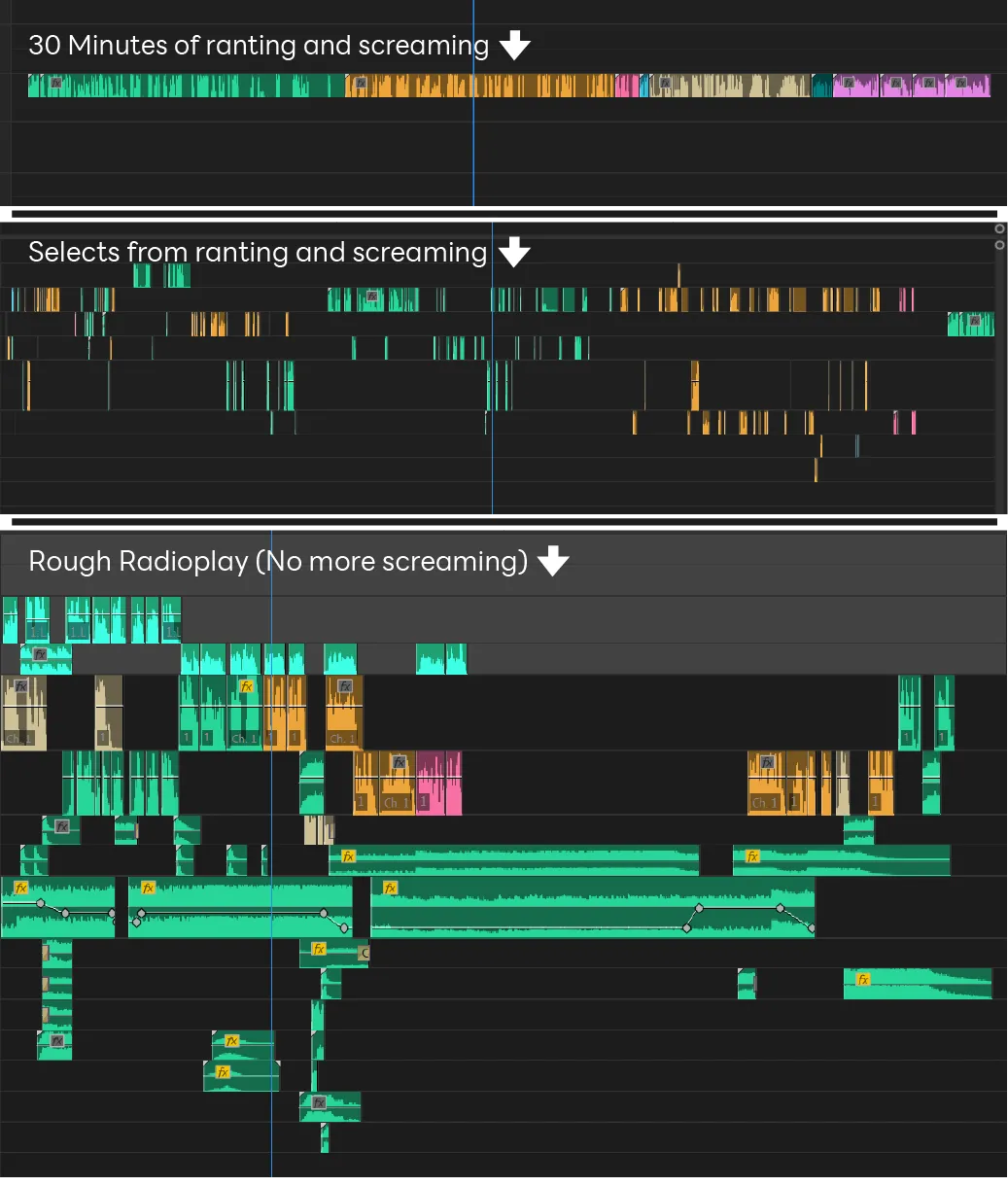
For Dave Battle, I didn't write a script. I had the concept in mind, as well as a general tone for the world and improvised roughly 30 minutes of mostly shouting that captured the tone of the world. I had a general feeling for what would be funny, and just blurted it all out stream of consciousness, then tried to edit these ramblings together into a coherent narrative.
I then added music and a few sound effects to get what is called a Radioplay. This is an audio version of the animated short that I can use to feel out the pacing, and use as a guide for the next step: Storyboarding.
Storyboarding and Asset Logging
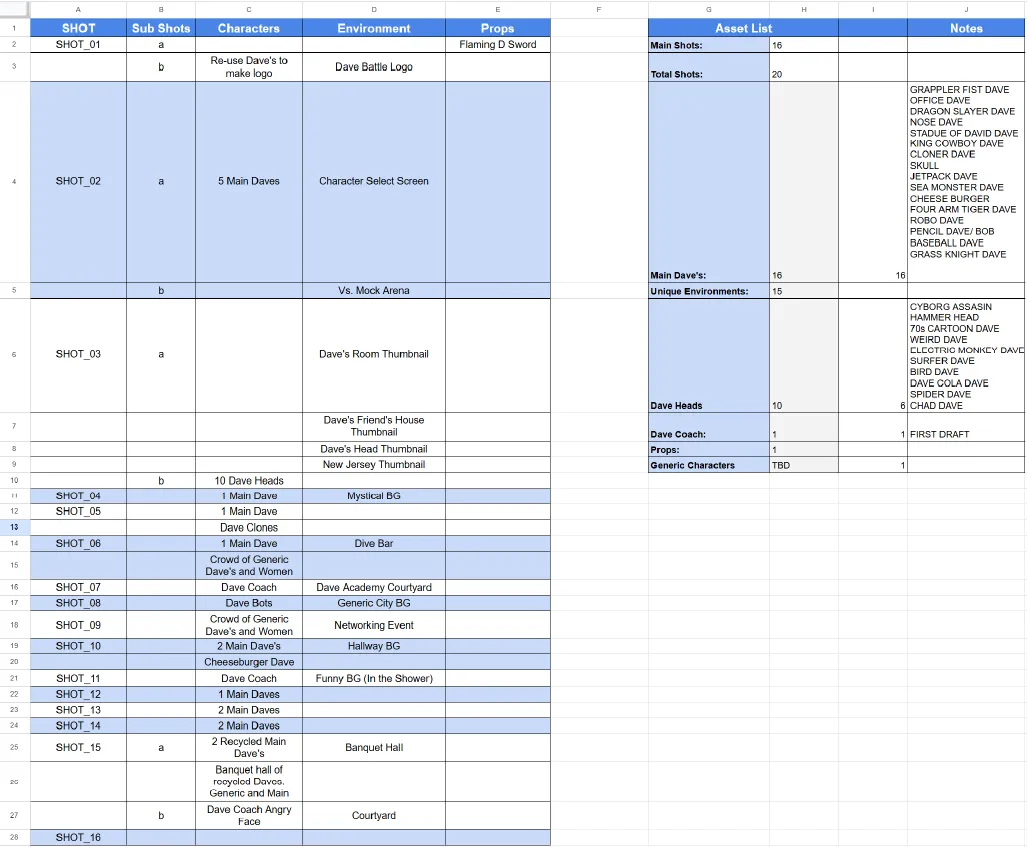
Now that the dialogue and pacing are set, I need to create a visual "comic strip" version of my short, or rather, a storyboard. The storyboard gives me a sense of how the story is flowing, and also will let me know how many characters, backgrounds, and assets I need to create.
As you can see, I broke down each shot into a number, and designated how many unique Daves I would need to design for each shot, as well as backgrounds, assets, or normal characters. Some Daves, I had an idea of and sketched in, other Daves were just drawn as a stick figure and would need to be conceptualized.
Character Design
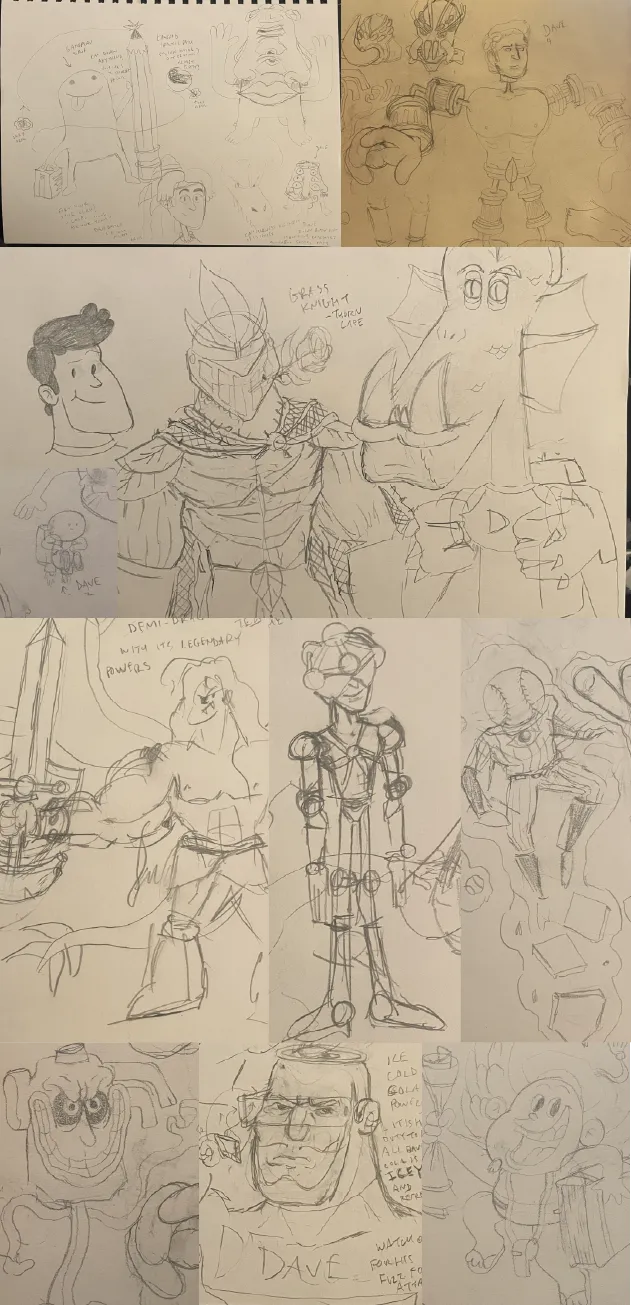
Now that the storyboard is done, and we have a log of all the assets we will need to create, it's time to start designing Daves. Character design has always been a love of mine, and I knew this was going to be such a crucial step of the process. The character design was nearly 50% of what makes Dave Battle, Dave Battle.
Since everyone is named Dave, I knew the characters would have to be vast, unique, and memorable, both visually, and conceptually. A Dave is a Dave. They are not freaky aliens, or spazzy monstrosities of randomness with a D on their chest. They have awesome, yet sometimes head scratching powers. Designing a Dave requires thinking a little bit deeper to find an interesting character, and set of powers.
I took a very passive approach when designing. I didn't force a daily or weekly quota on how many Daves I needed to design, rather I tried to just listen for when a Dave idea would appear, and would try to follow whatever instincts would show me new Daves. I found, the more I forced the need to finish a Dave, the less authentic it felt.
Over 30 Daves needed to be designed, so this did not exactly happen over night, but designing these characters was the heart and soul of the project. I was willing to take the time needed to make sure these were the right designs, not just "completed" designs. Had an absolute blast.
3D Modeling
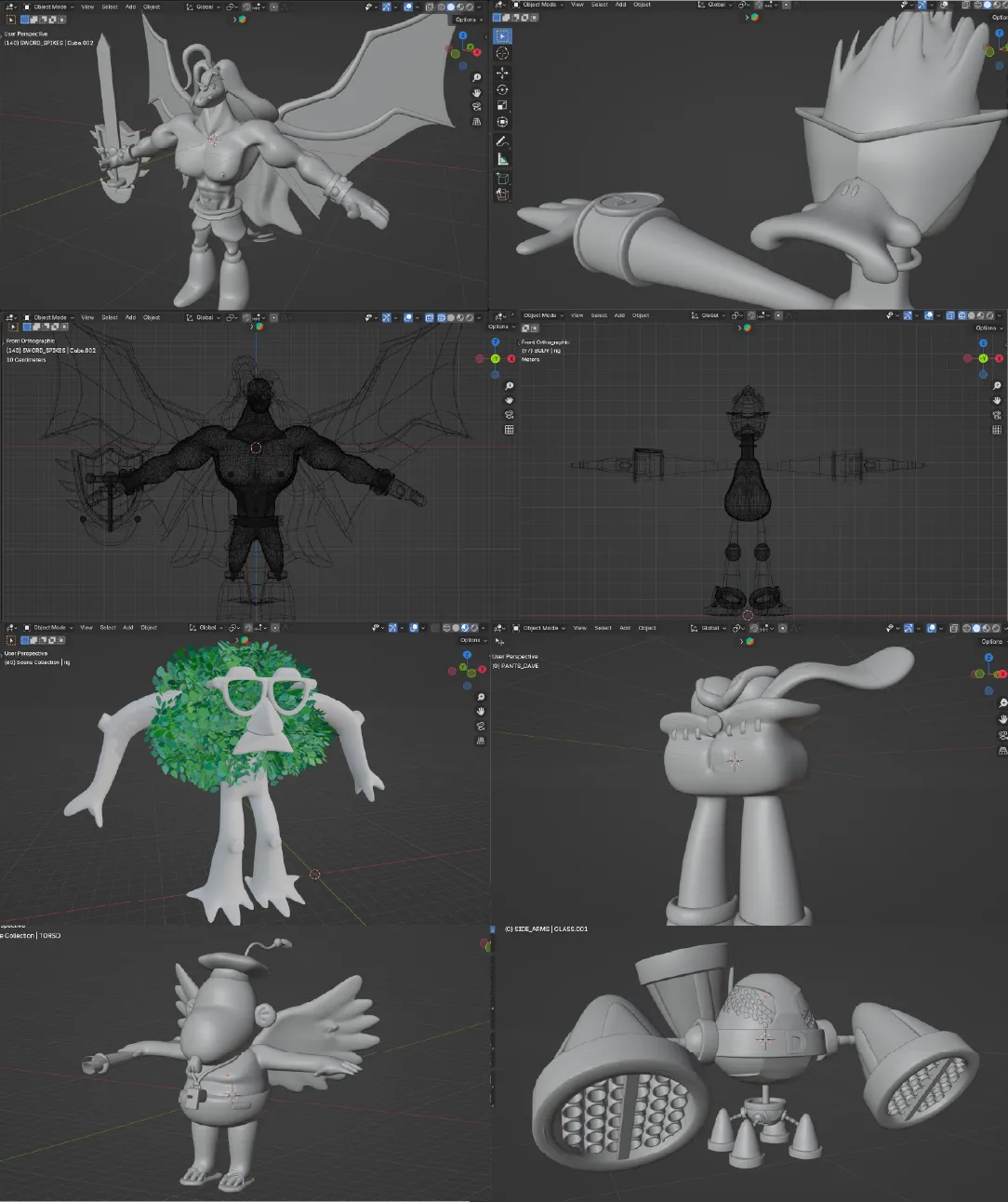
Once I had all of the characters designed, they had to be modeled. My program of choice was Blender.
A big overarching theme in this project was not to stress about how something would be accomplished, but to figure it out when I got to it. This very much came to a head in modeling, as many of the designs I was not yet sure how I would accomplish within my scope. Modeling was an awesome part of the process. And it was very fun seeing the characters come to life.
Rigging
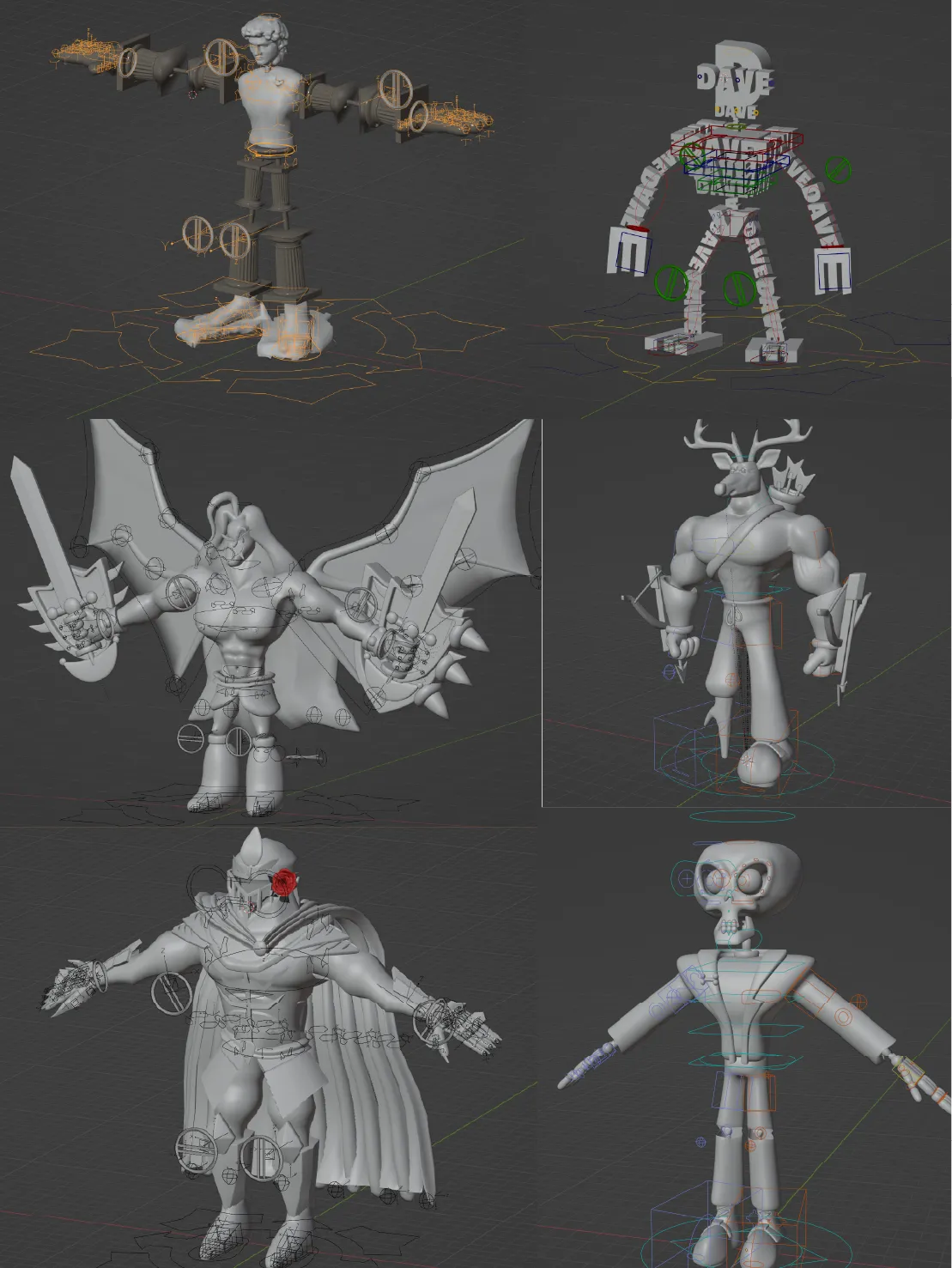
I hate rigging. I used some awesome Fiverr artists to do 90% of the rigging.
If you need someone to rig for you, I have a good hookup.
Animating
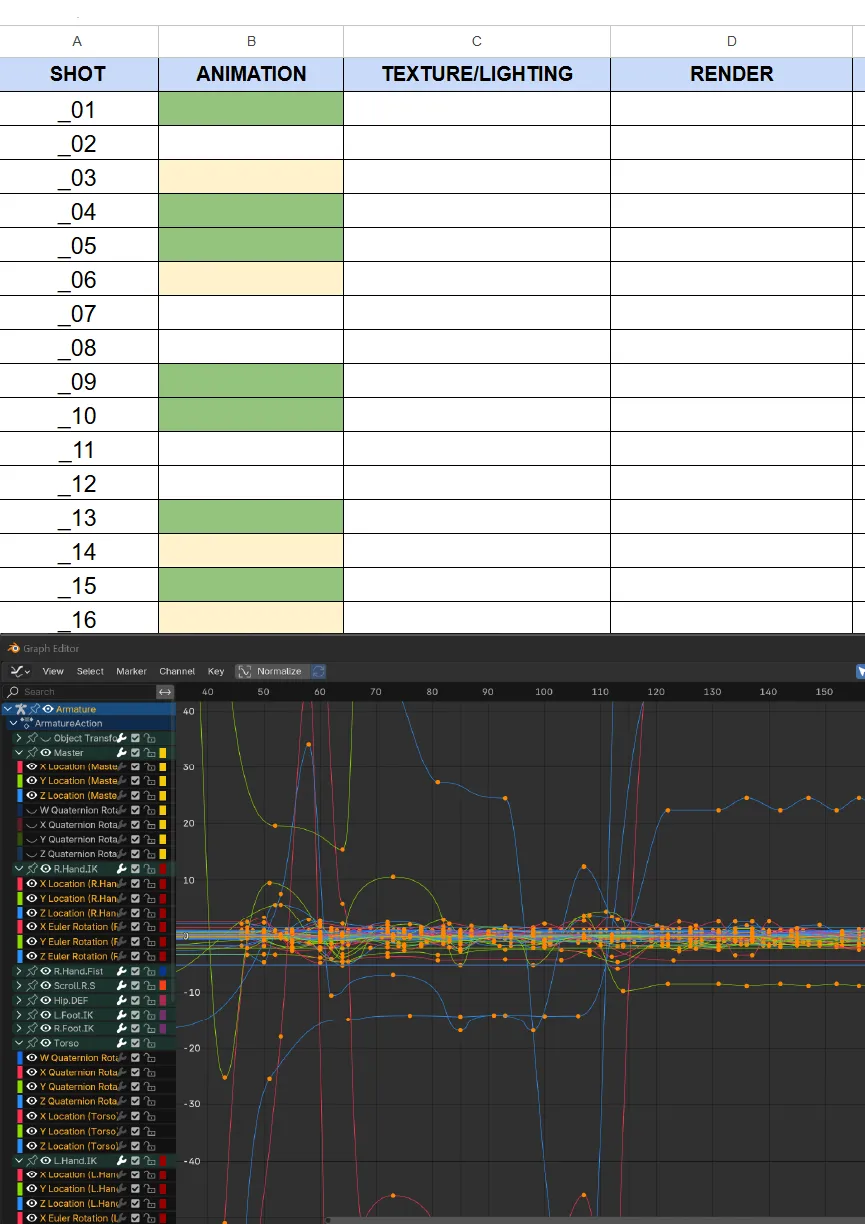
Up to this point, I have spent 4 months working on Dave Battle. I have seen the storyboard hundreds of times, I have thought about each and every character, shot, background, and special effect for months. I had seen the short played out in my head many times, but animation is where it all truly comes to life.
Aside from character design, animation is my favorite part of the process. I had been dying to get to this point. At times it felt like I would never arrive. But it finally did. And there's no matching watching a character you made fully animated.
Lighting and Texturing
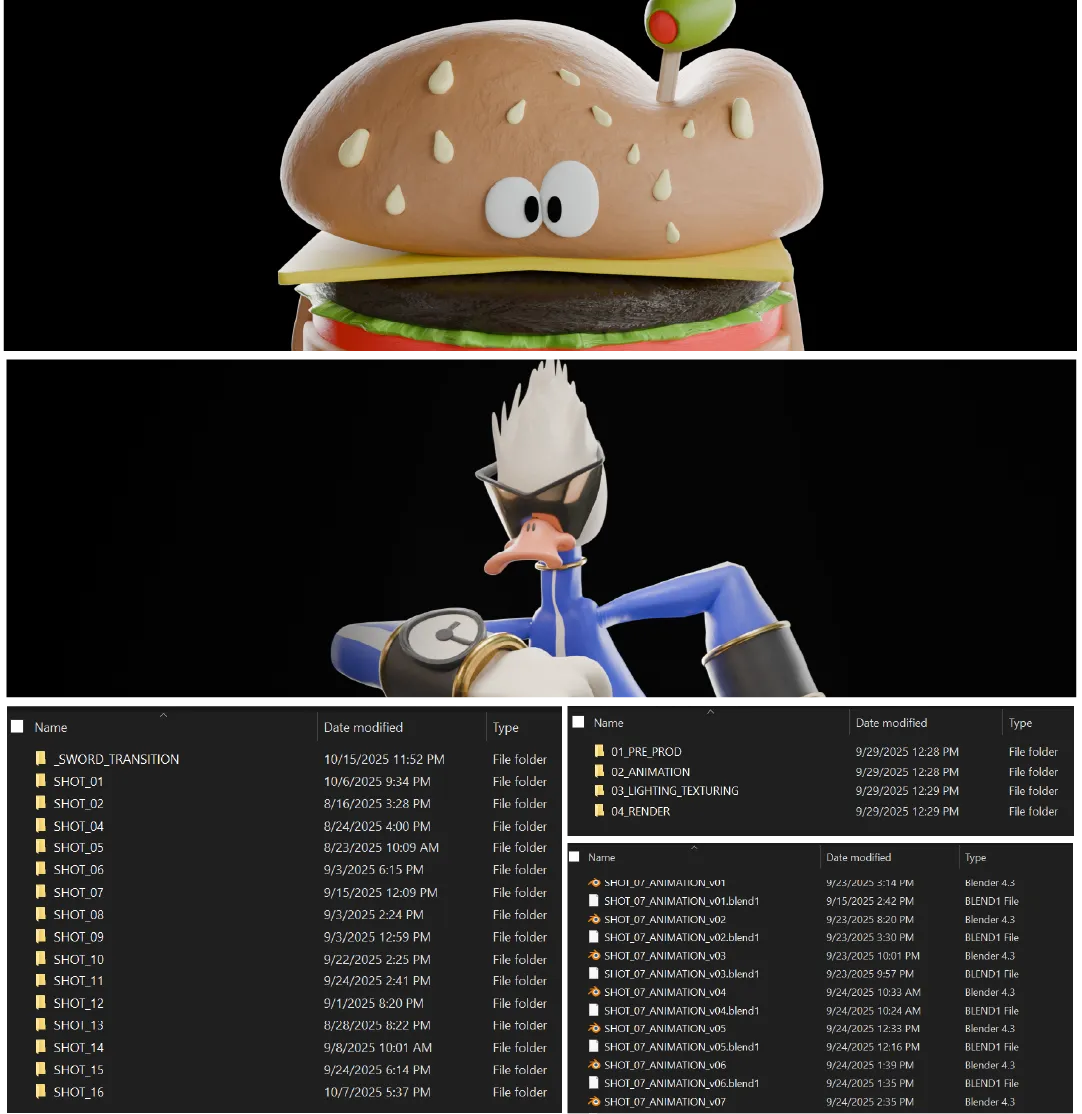
Not too much to say here. Adding texture to the 3D models, and then lighting those scenes.
Rendering, Compositing, and Final Edit
3D rendering is a beefy process. I used Cycles out of Blender, and a render farm. Easy peasy.
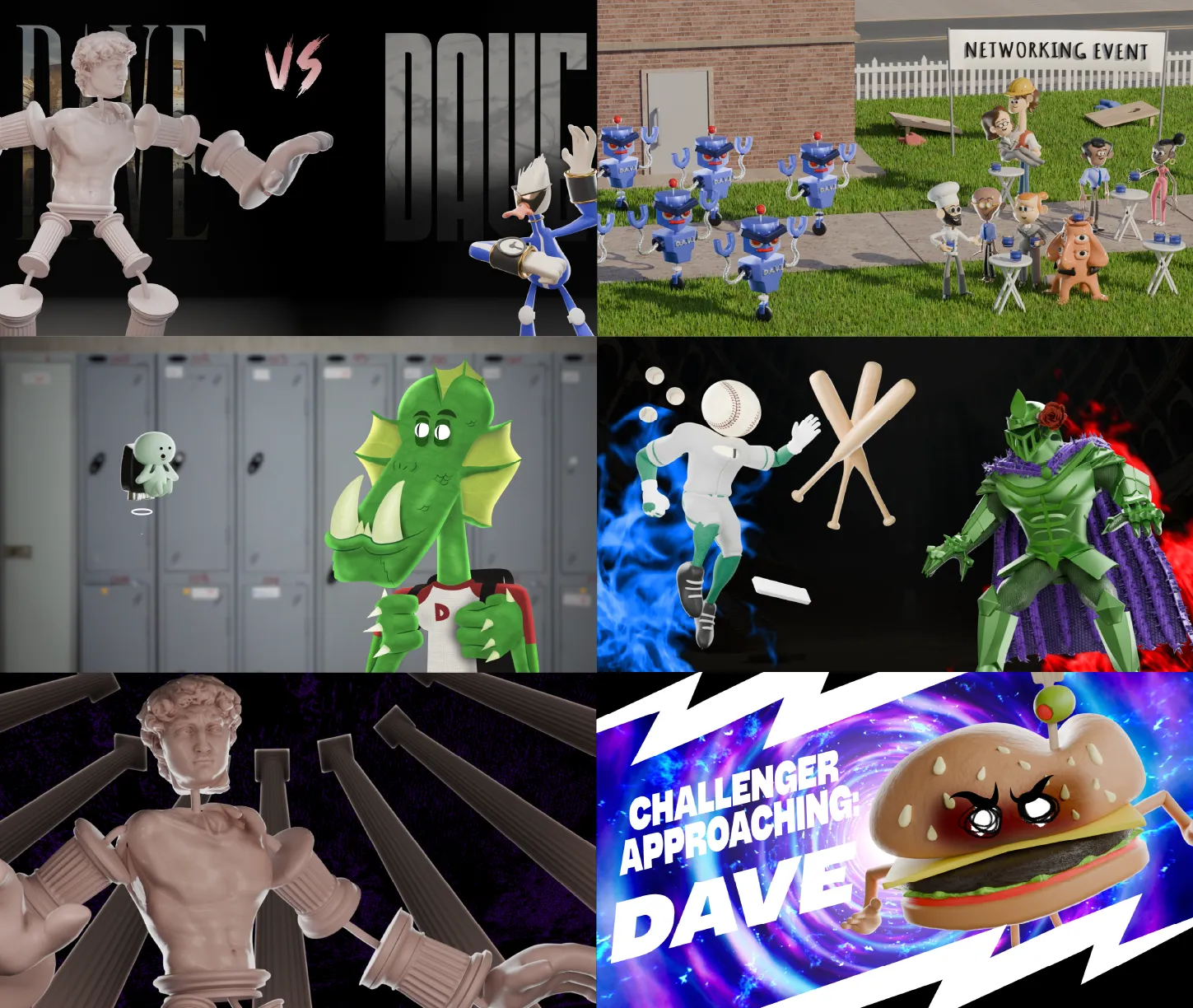
Compositing is another part of the process I love. For many shots, I had character animation, background art, special effects, etc. all made separately. Compositing is the art of combining all of those elements together seamlessly, while adding any extra polish you can think of. Almost there.
After 6 months of working on Dave Battle, all that was left to do was make a few tweaks; updating sound effects/voice over, adjusting certain transitions, updating a small error here or there, and then we finally have a finished animation.
Reflection and Lessons Learned
Dave Battle was truly a transformative project for me. I have never worked on an animated short for 6 months before, and there were times when I didn't know if I would ever see the finish line.
Dave Battle is a vast, expansive, malleable world that I truly love. Trying to communicate the idea properly was truly a thrill, and was a task I did not take lightly.
One key takeaway I found was that sometimes it is beneficial to the longevity of the project to ease off right in the thick of a flow state. This taught me that I don't need to churn and churn until every last drop of flow is used up. But rather, I was grateful for the waves as they came, and would give them plenty of space to breathe. I also found that upon returning to my work, I would feel more rejuvenated, and could make strong decisions on the characters.
Anyway, I have certainly rambled on more than long enough for a 60 second short, but, it was a very meaningful project, and I just want to say I appreciate you for taking any interest at all in this short. I hope you enjoy Dave Battle as much as I do. Thanks!
Special thanks to Elijah Sheffield for a TON of technical help and free therapy.